13 Essentials for Raising Meat Rabbits for Beginners
Meat rabbits are a great way to raise and harvest your own meat, even in your small, urban backyard. The meat is as delicious and versatile as chicken, and the rabbits themselves do not require much space or infrastructure.
*This post contains affiliate links. If you purchase through the link, I will receive a small commission at no expense to you.

Ever wonder if there was a way you could raise and produce your own meat, even in a small, urban backyard?!
Raising meat rabbits is an excellent choice! Rabbit meat is mild like chicken, and the animals themselves do not make noise, take up a lot of space, or are difficult to butcher.
Want to learn how to raise meat rabbits from set up to processing? Check out my complete beginner’s guide to get started!
Rabbit Care Essentials
1) Breeding pair
- A buck and a doe – In order to begin breeding rabbits, you will need a male and female rabbit to breed for litters.
- The litters will be raised and butchered for meat.
- To capitalize on the amount of meat you can raise in your own backyard, consider getting more than one doe (female rabbit) so that you can have a rotating breeding schedule.

2) Food for Meat Rabbits
- Hay – Most of a rabbit’s diet is hay. Hay is essential for the digestion and well-being of a rabbit. Do not purchase pet rabbit hay. Instead, buy a bale of hay from your local feed store.
- Pellet food – In addition to hay, rabbits also need small amounts of pellet food to round out their nutritious diet. Research the type of pellet food and its ingredients that you want to feed your rabbits.

3) Cages for Meat Rabbits
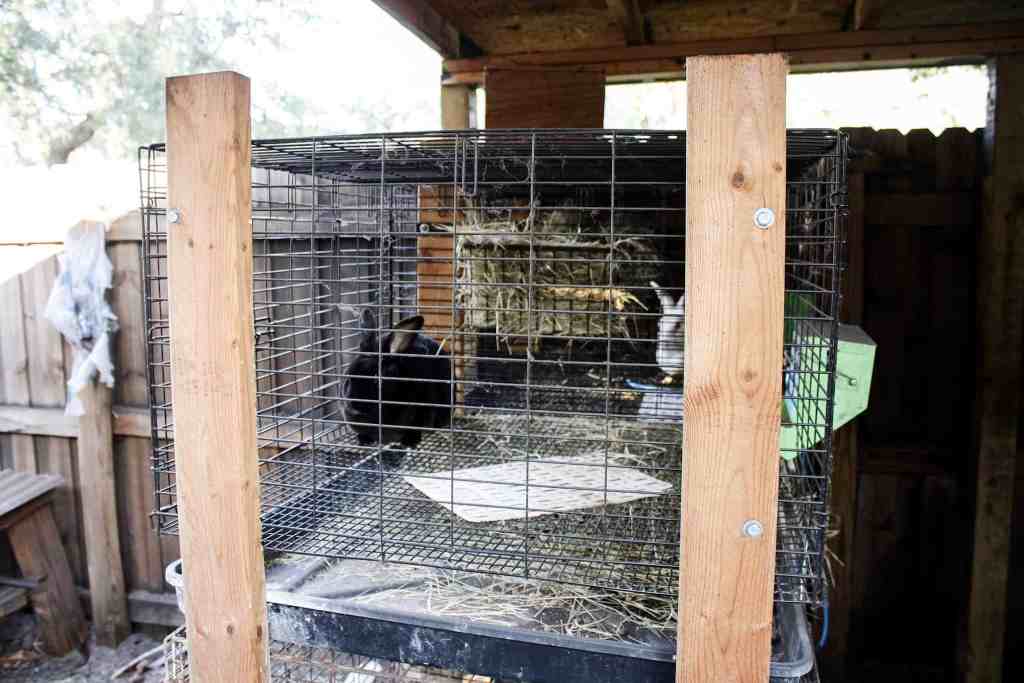
- There are many different ways to raise rabbits. Some like to allow rabbits to roam and graze in the yard while others prefer cages or hutches. We have chosen the cage method because saves space in our small backyard and allows us to track breeding and predict births (Get your FREE breeding tracker & checklist)
- Does (female rabbits) need a 30×30 inch cage in order to have plenty of room for themselves and their babies.
- Bucks (male rabbits) need a 24×24 inch cage. A buck’s cage that is too big could make breeding difficult, and he only needs enough room for himself.
- Make sure the cages are covered in some way to be shielded from the rain. Our cages are under an awning off our chicken coop.
4) Feeder Boxes
- Metal feeder boxes are the best because rabbits cannot chew through metal.
- The best way to install feed boxes for easy feeding each day is to cut a rectangle hole in the cage and connect the box from the outside.

5) Hay Baskets
- In addition to the feeder boxes for pellet food, rabbits also need hay baskets in their cage.

6) Waterer
- A nipple waterer has been the best type of waterer for our rabbits. They are cleaner and take up no space.
- Choose a metal nipple waterer so that the rabbits cannot chew through it.

7) Nail clippers for Meat Rabbits
- Rabbit nails can be surprisingly long and sharp making them uncomfortable to work with. Regularly clipping their nails with a sturdy nail clipper is a must!
8) Nest Box for Meat Rabbits
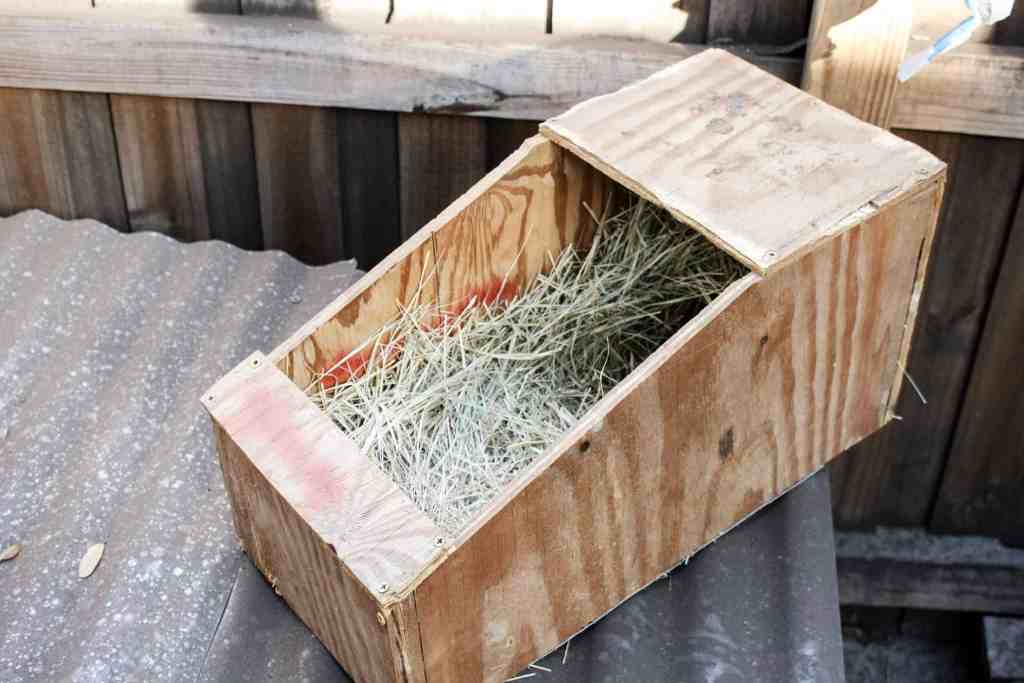
- A nest box is essential for does to give birth in. If you are breeding more than one doe at a time, it is important to have more than one nest box.
- You could purchase a nest box or cobble together your own with scrap wood. As you can see, we made our own with what we had.
Butchering Essentials
9) Sharp Knife
- A short, skinnier knife works well for butchering a small animal
10) Club
- A club is an essential tool for knocking out the rabbit so that it does not feel pain.
11) Butchering Table for Meat Rabbits
- You will need a surface to hold the meat and supplies as you butcher. We prefer a table that has a drain to keep the process cleaner.
12) Bucket
- A 5 gallon bucket is needed unwanted rabbit parts that need to be gathered and disposed of at the end of the butchering day. We put our bucket under the drain of our table in order to use the blood to nourish the soil of our garden.
13) Cooler for Rabbit Meat
- Any insulated cooler will work. At the end of your butchering day, the rabbit mean will need to soak in ice water to keep the meat fresh and to thoroughly rinse the meat of any blood.
Meat rabbits are an excellent way for families living in the city with urban backyards to produce their own meat that is safe, local, and nutrient dense. Follow along to learn more about how to care for your rabbits, breed them, butcher, and more!




This was helpful information! How do you clean and maintain your rabbits cages?
Do the Does and Bucks stay apart except when breeding?
Do the baby rabbits stay in the does cage or their own?
Thanks!! Looking forward to learning from you!
Hey there! Great questions and I can’t wait to write more posts that go into detail! However, the short answer is, we have raised cages, therefore it is easy to pull the trays out, compost, hose them down, and put them back. Yes, each of our breeding rabbits live in separate cages. The baby rabbits will stay with their mom for a few weeks until they are weaned. Then we separate them by gender and move them to a “grow out” cages until they are full grown. Thanks for asking!