How to Butcher Rabbits: Step By Step Guide for Beginners
Raising meat rabbits is the best way to produce your own meat in a small backyard. Here is how to butcher rabbits, the perfect step-by-step guide for beginners. Want to learn more? Check out my complete beginners guide for raising meat rabbits!
*This post may contain affiliate links. See our disclosure policy.
How to Prepare to Butcher Rabbits
Butcher day takes preparation, especially if this is your first time butchering rabbits. You will need to gather your supplies and plan your set up before you begin. Check out this blog post How to Prepare to Butcher Meat Rabbits to learn more!
How to Butcher Rabbits
Here is a step-by-step guide to teach you how to butcher rabbits as a beginner!
1. Stun the rabbit.
The first step to butchering (or culling) is to stun the rabbit. To stun the rabbit, hit the rabbit between the back of the skull and the ears with a hard object (a fish bopper works GREAT). The stunned rabbit will put up less of a struggle during the culling process.

2. Cull the rabbit.
After the rabbit has been stunned, hang it upside down by it’s feet. Hold the ears and quickly cut along the throat with a sharp butcher knife. Allow the blood to drain and the muscle twitches to stop before you continue.

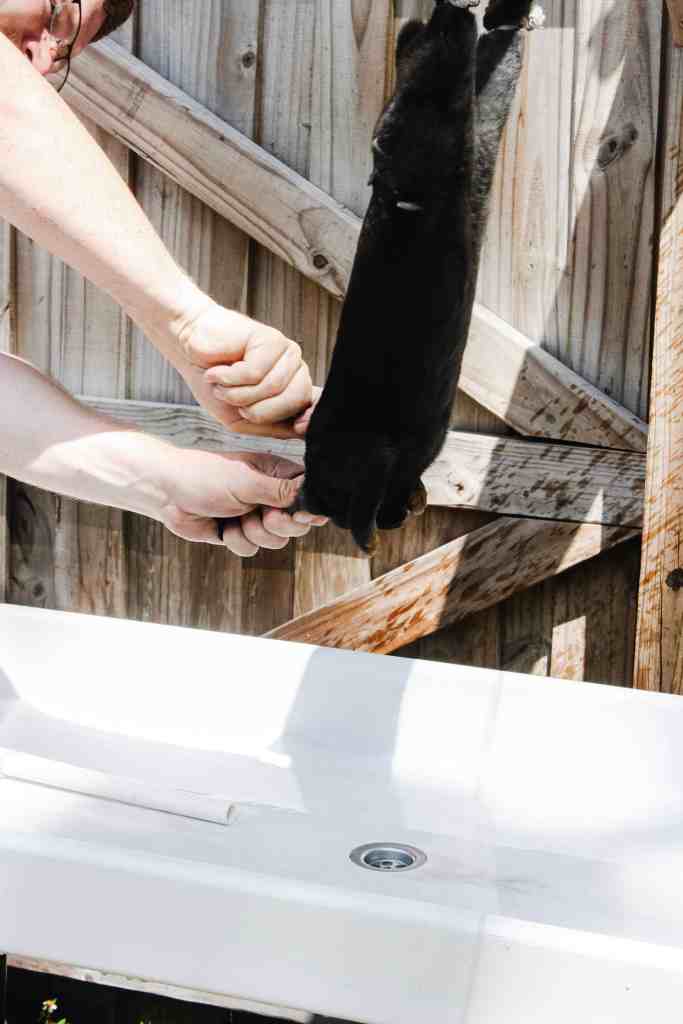
3. Skin the rabbit
Next, cut the skin all the way around the back legs. Make sure you cut deep enough to cut the skin but not too deep to cut through the meat underneath.
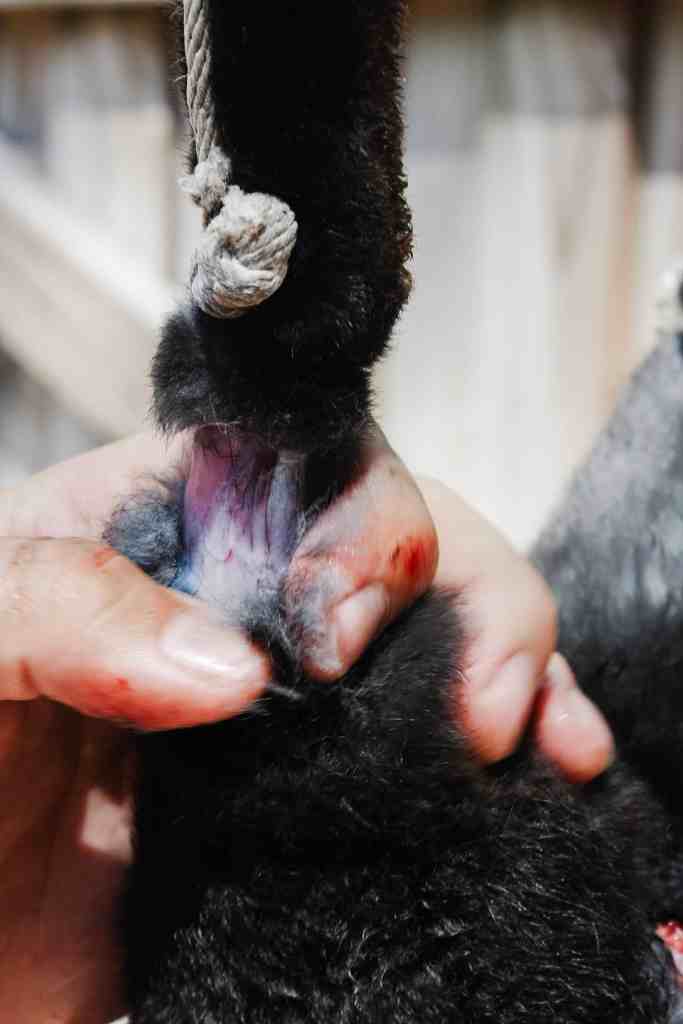
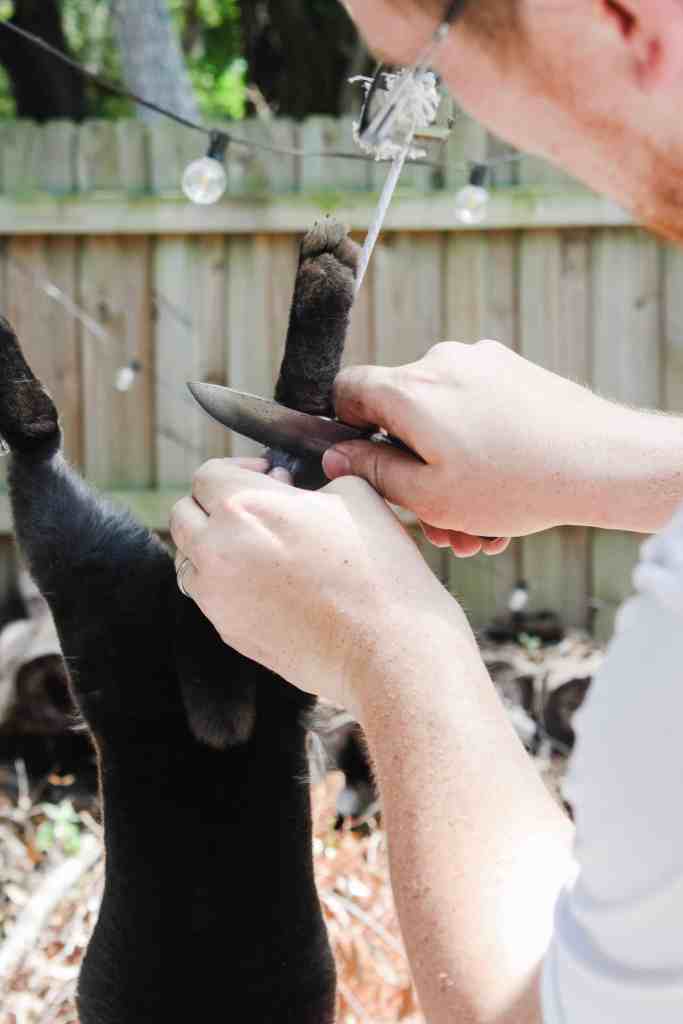
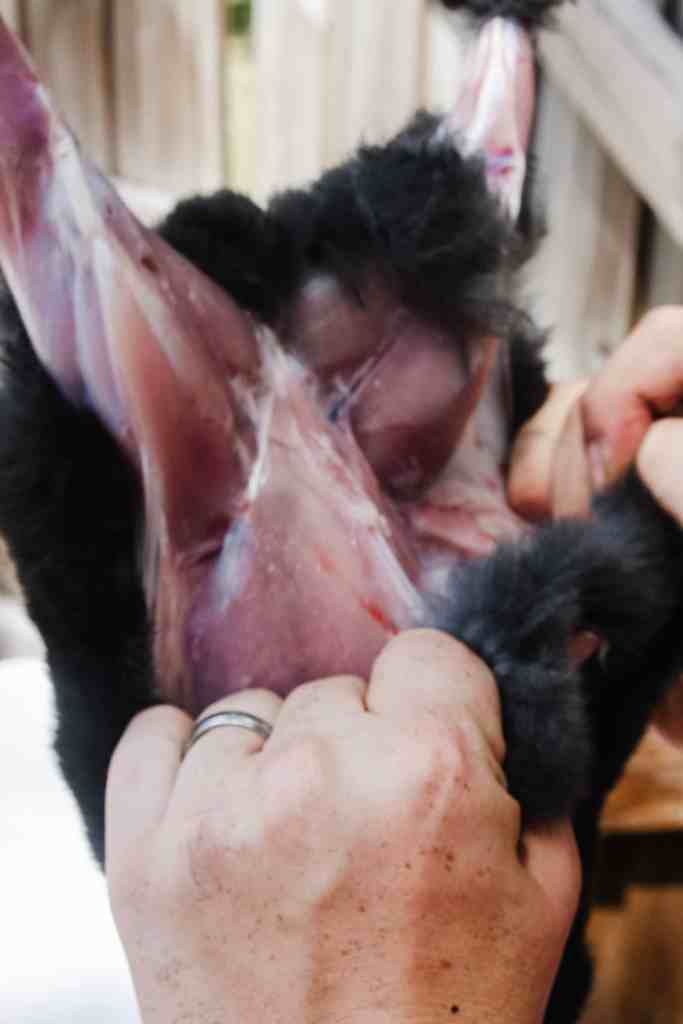
Once you have cut the skin around both legs, cut along the base of the tail. Cut through the bone of the tail, but do not cut it all the way off. Then cut in a V shape down the front of both back legs towards the belly. This cut should allow you to pull the entire hide down in one piece


Pull the the hide down like a sleeve. Once you reach the front paws of the rabbit, cut off the paws with the garden shears. Throw away the pelt, tan the pelt immediately, or freeze the pelt to tan later.
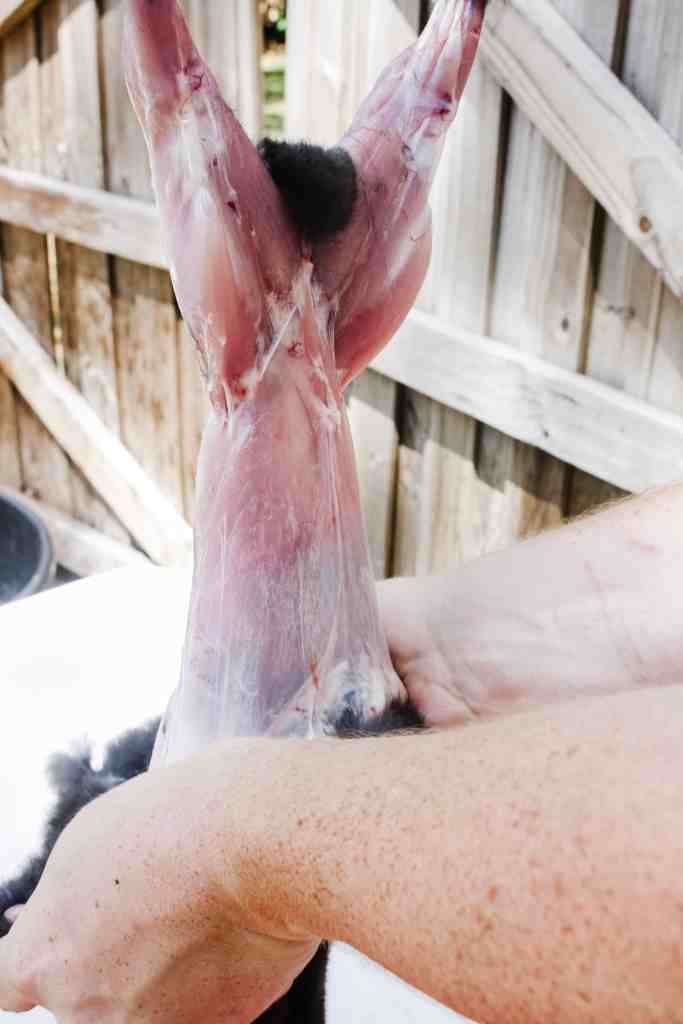
4. Cut the legs.
Once the rabbit is skinned, cut the legs on the line where the skin was removed with the shears to get the rabbit from the stand. Prepare to process the inside of the rabbit.

5. Open the chest cavity.
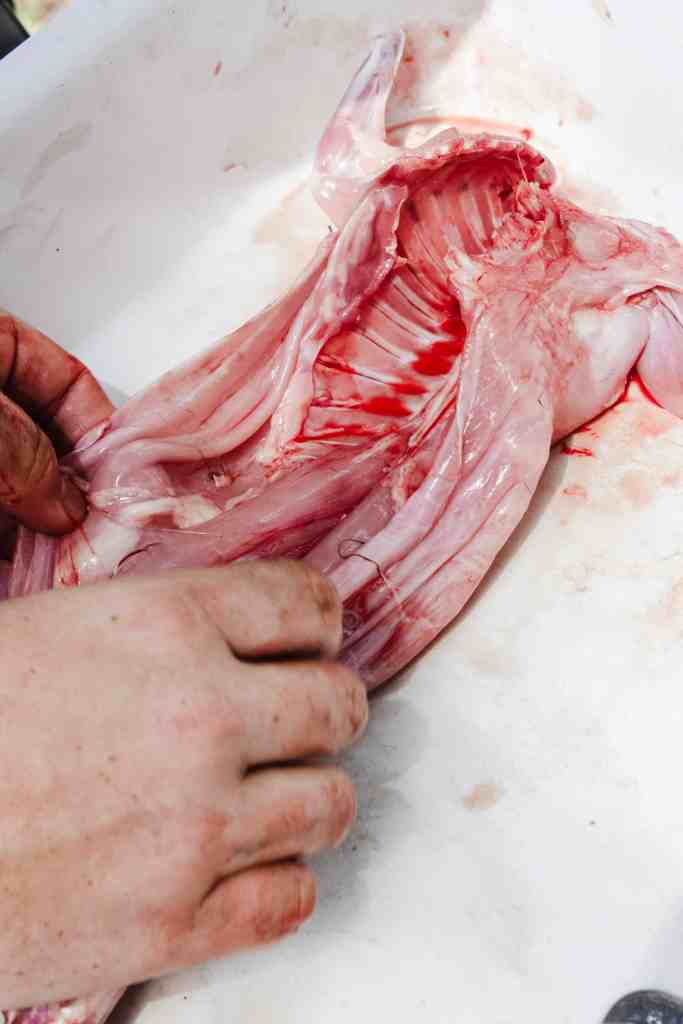
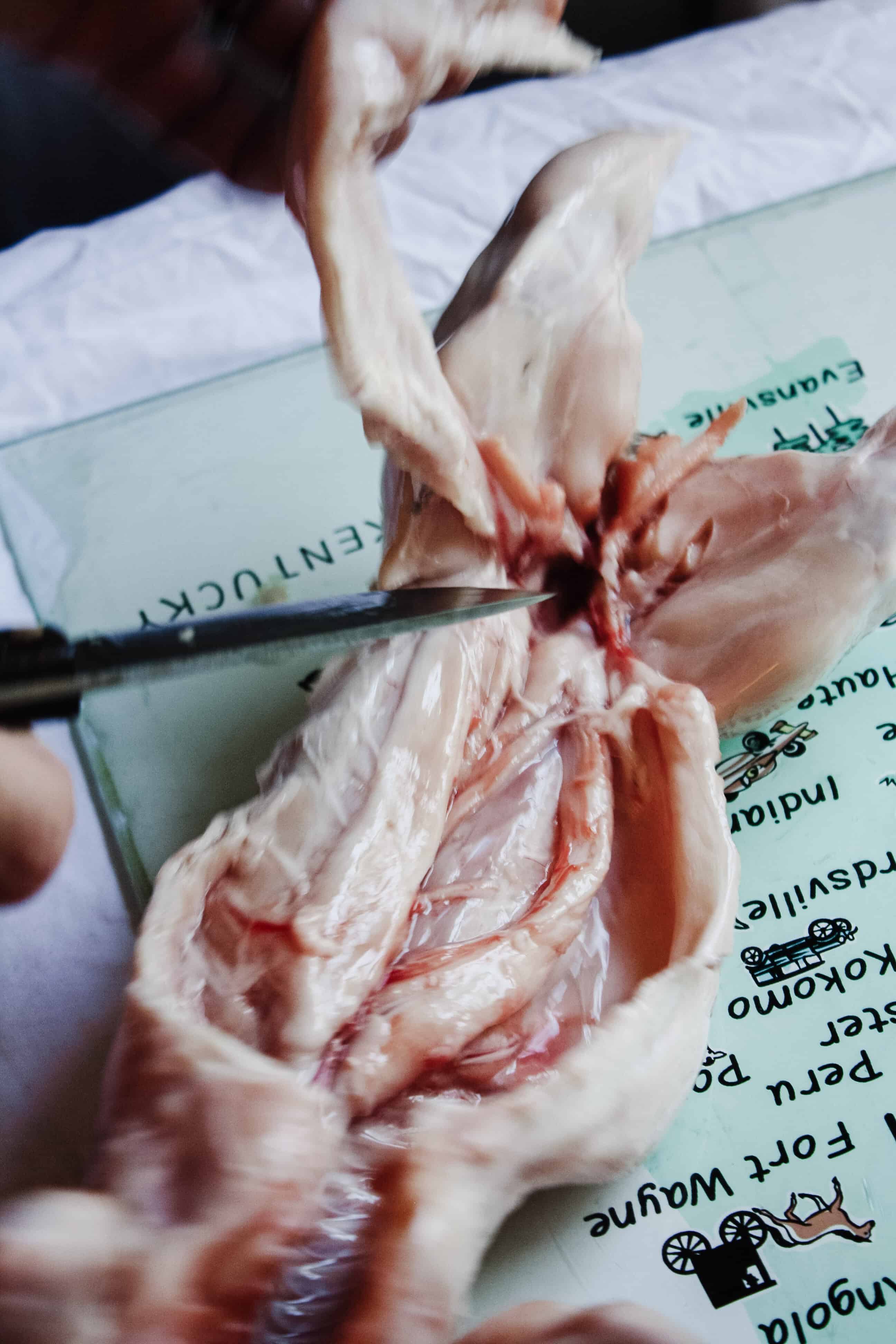
Flip the rabbit stomach-side up on the table. With the butcher knife or shears, cut along the center of the rib cage and crack it open.
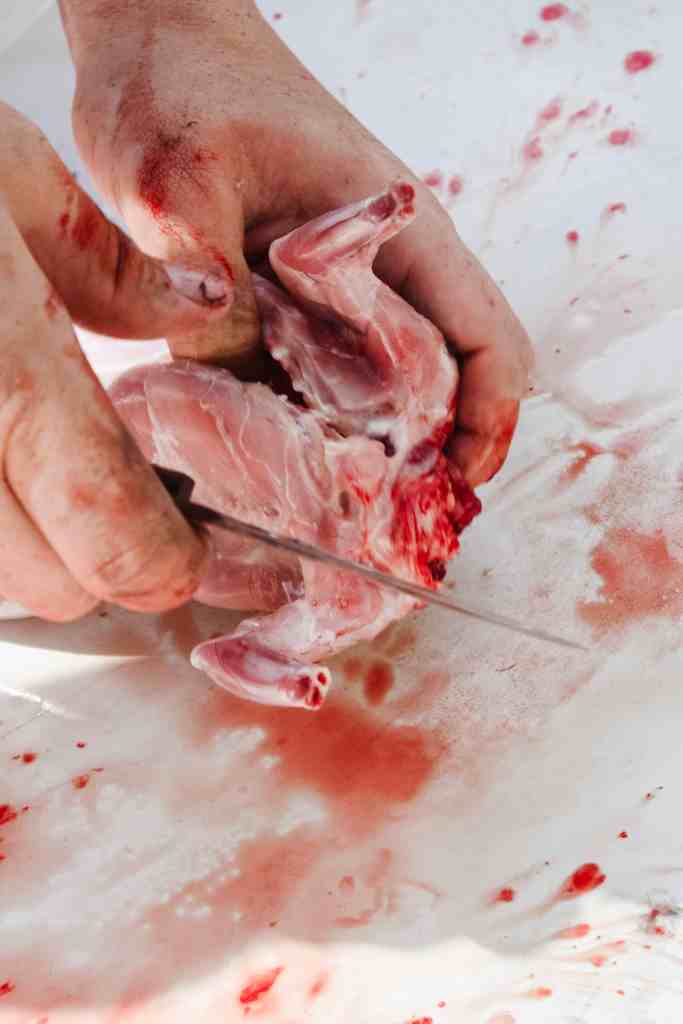
Right below the rib cage, there will be a thin layer of muscle holding the organs together in the cavity of the rabbit. Stick two fingers inside the cut rib cage and find the thin layer of muscle. Lift the muscle with your fingers from the inside and gently cut it down the length of the carcass down to the anus.
Be careful not to cut the organs with your knife, especially the bladder (yellow sack by the anus). You want to avoid getting excrement on your meat. If it gets nicked, however, just be sure to rinse the meat thoroughly with the hose before placing in the cooler.
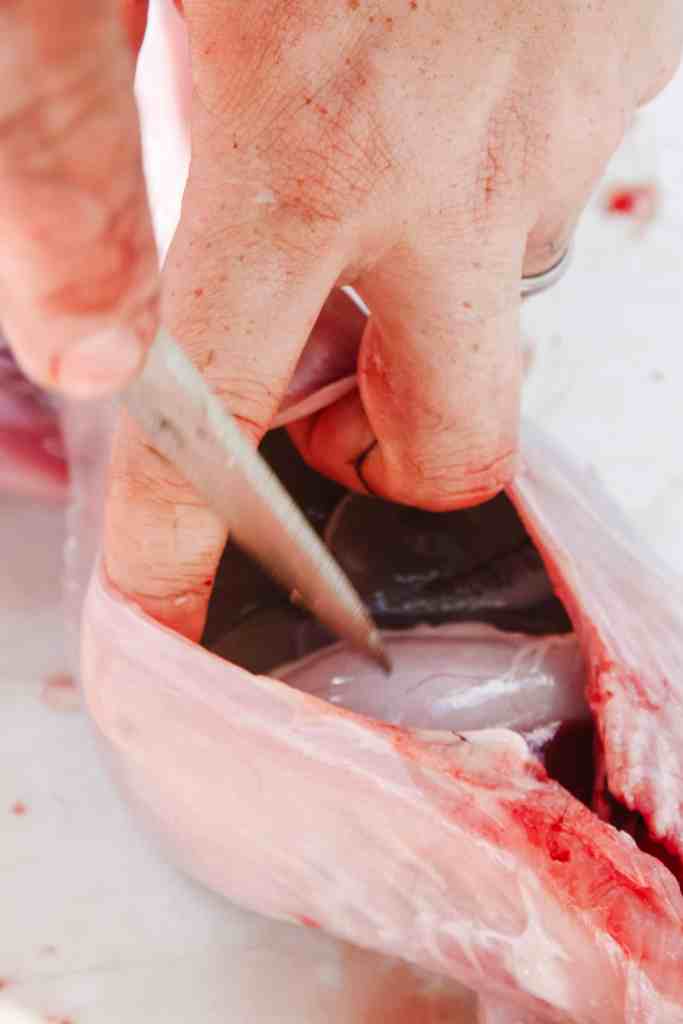
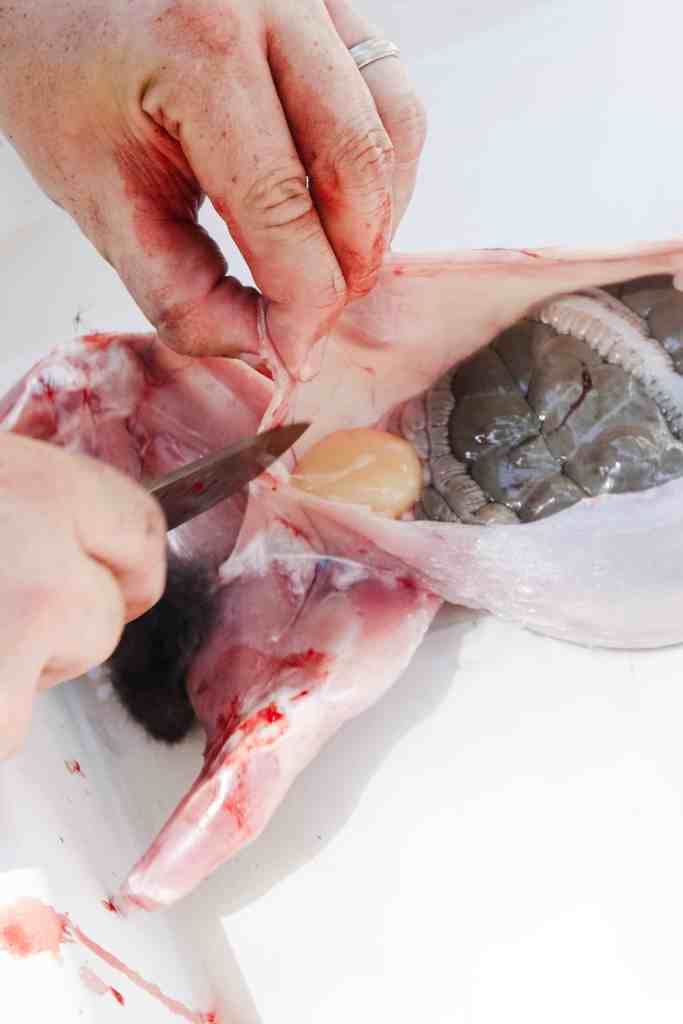
Once the muscle has been cut down to the anus, place your knife at an angle from the anus along the back leg and cut through the bone. This cut breaks open the pelvis to allow space to remove the organs. Bend the back legs back a few times to break open the pelvis further.
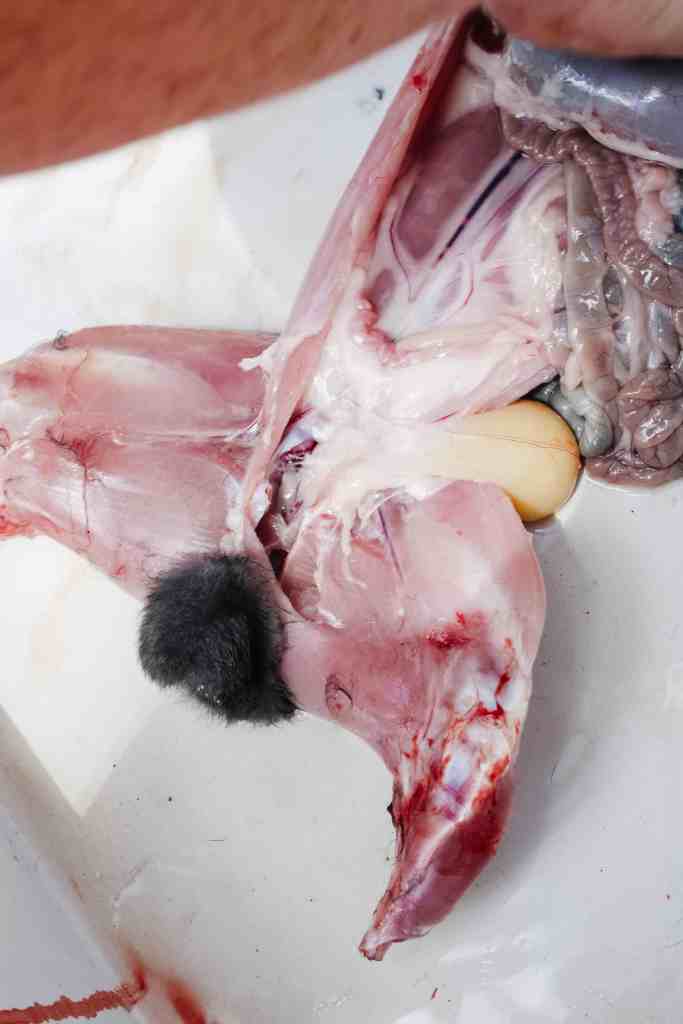

6. Remove the organs.
At the top of the organs, below the rib cage and behind the organs, there will be a stretchy muscle called the diaphragm. Place two fingers behind the diaphragm and pull down along the inner cavity to pull all of the organs out at once.
Pull your fingers all the way through the open pelvis to clear out all of the organs. Pull the tail off too, if it is still attached. Go back up to the chest cavity between the ribs and remove the heart, lungs, and trachea.


7. Clean the carcass.
Check the inside of the carcass and remove any strands of fat (these can also be cut off later). Rinse the meat with the hose to remove any extra fur, excrament, or blood that may still be on the meat. Place the carcass in the cooler of cold water and ice.
8. Save the liver and kidneys.
This part is optional, but you can save the liver and kidneys of the rabbit to add into your ground rabbit mixture for a more nutrient dense meat. The kidneys look like two small beans. Remove the fat surrounding them with your fingers.

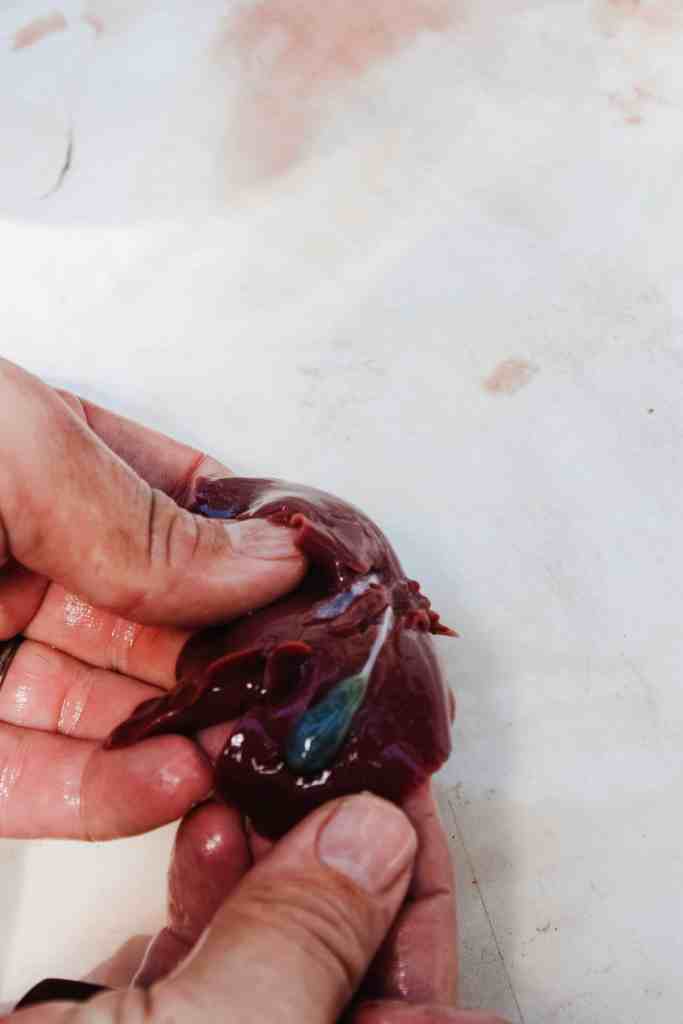
Next, find the three folds of the liver. They are dark red flaps. One flap will have a little blue sack on it called the gallbladder. The gallbladder filters toxins the rabbit may have encountered while living, therefore it needs to be removed carefully. Cut along the sides of the liver surrounding the gallbladder.
If the gallbladder is nicked and opens up, throw away the liver. You do not want to ingest the toxins that the gallbladder was holding on to. Once the gallbladder is cut out, place the liver and kidneys in the cold ice water as well.
9. Chill the meat.
Chill the meat in a cooler with cold water and ice until the next day to allow rigor mortis to set in and clean the blood off of the rabbit meat. Blood in the meat will cause the rabbit to taste gamey. Remember to add more ice to the cooler every 12 hours for up to two days.
What’s next?
After the rabbit meat has sat in the cooler of ice until the next day, it is time to debone the meat (optional for easy cooking later), package it, and freeze it for future meals. Here is a step by step picture guide on how to debone a rabbit if you are a beginner.
How do I cook rabbit meat?
You are in the right place! Here are some amazing recipes for rabbit meat that your whole family will love!


Raising meat rabbits is the best way to produce your own meat in a small backyard. This step-by-step guide teaches beginners how to butcher meat rabbits.




One Comment