Meat Rabbit Set Up for Small Backyards
Are you looking for the perfect meat rabbit set up that will work in your small, urban backyard? Check out this set up that is easy to manage and does not take up a lot of space!
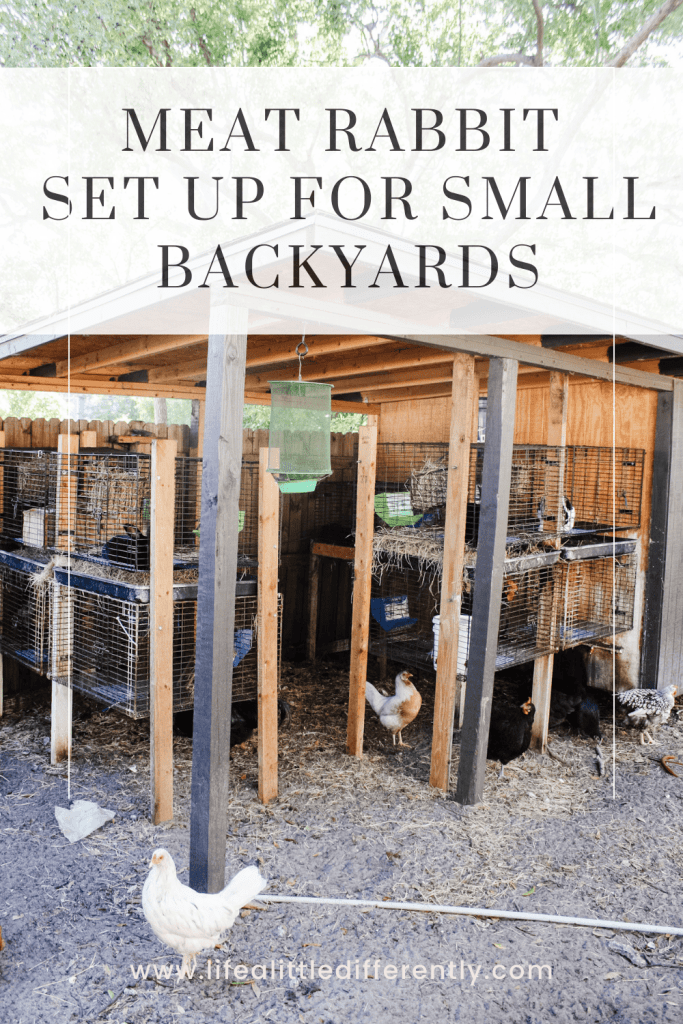
Did you know that you can produce your own meat in a small backyard? Meat rabbits are a great way to produce your own meat in a small amount of space.
Here is a great meat rabbit set up for small backyards!
Cage vs Colony
There are two common types of meat rabbit set up. A colony set up means that the rabbits live together in an open colony, without division between male and female. In cages, each breeding rabbit is given their own cage and lives separate from each other.
In a small backyard, cages make it easy to control breeding, predict births, and protect the rabbit from attacking each other.
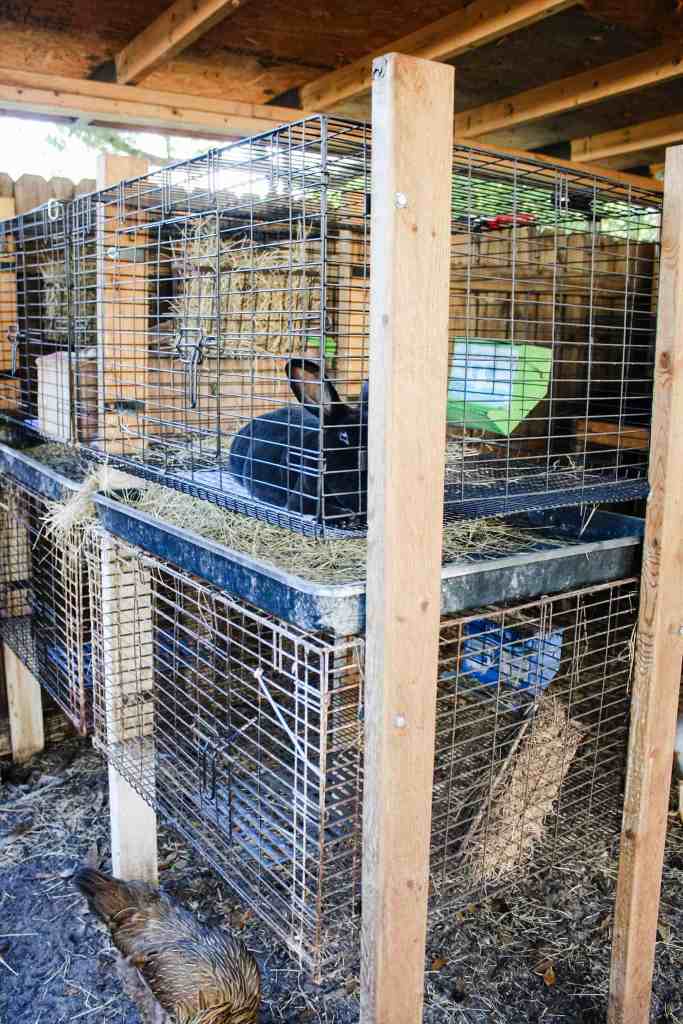
It is important to have a cage for each breeder rabbit PLUS two or more extra cages as “grow out” cages for the litters. See How to Breed Meat Rabbits in Your Own Backyard to learn how to use “grow out” cages.
Elevated Cages
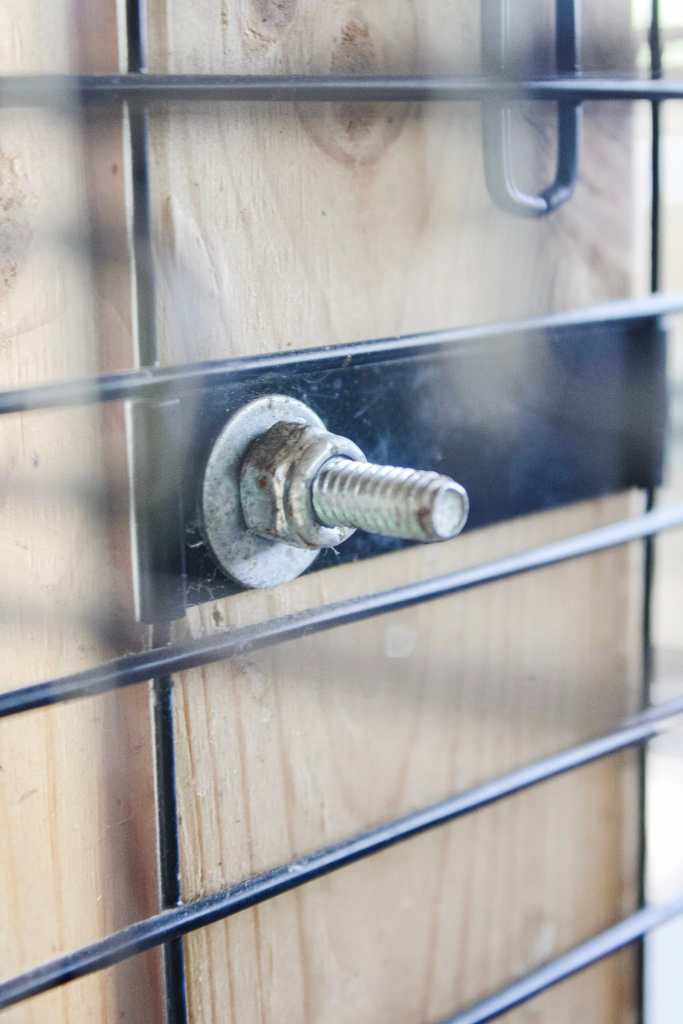
Elevating the rabbit cages allow vertical space to be used rather than horizontal space. Rabbit cages can be secured to four posts using bolts in the steel plates attacked to the sides of the cage.
The rabbit cages are also MUCH easier to clean because the trays can be slid out from underneath the cage without disturbing the rabbit. The waste can be composted and the tray can be hosed down easily to keep your rabbit cages clean.

Foot pads also ensure that the rabbits have a comfortable place to sit since the cage is suspended above the tray.
Feeding System
It is important that rabbits have metal feeder boxes because they will chew on them. Cut a small hole in the cage the size of the feeder and attach the feed box to the outside and through the hole.

Accessing the feed box from outside of the cage makes it quick and easy to feed the rabbits each day.
Watering System
To eliminate the daily task of watering the rabbits, an automatic watering system can be a lifesaver! If you only have one hose spicket, get a hose splitter in order to run a hose dedicated to the watering system.

Run the hose to a 5 gallon bucket that is elevated above the cages, and attach it to a float valve on the inside of the bucket. The float valve will monitor the water levels and shut off the water to the bucket when it is full. The valve helps with evaporation, replenishes with fresh water, and also keeps your hose from running constantly.
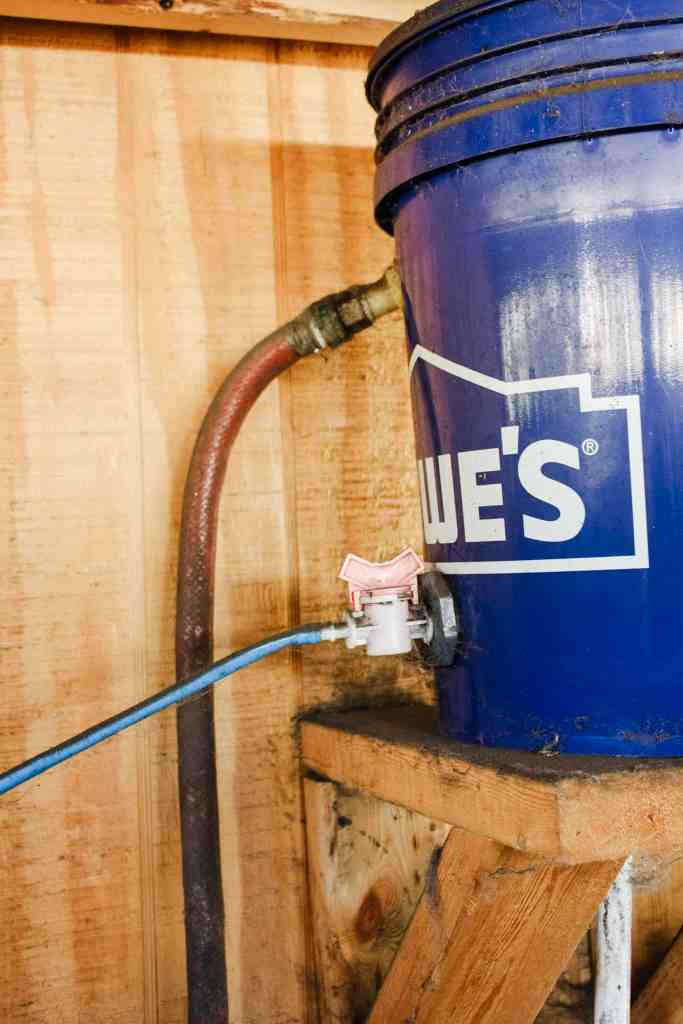
Next, drill holes on the lower half of the bucket, screw bulkheads into the hole, and attach the blue water tubing to the bulkheads. Run the tubing along the outside of your cages and attach the nipple waterer.
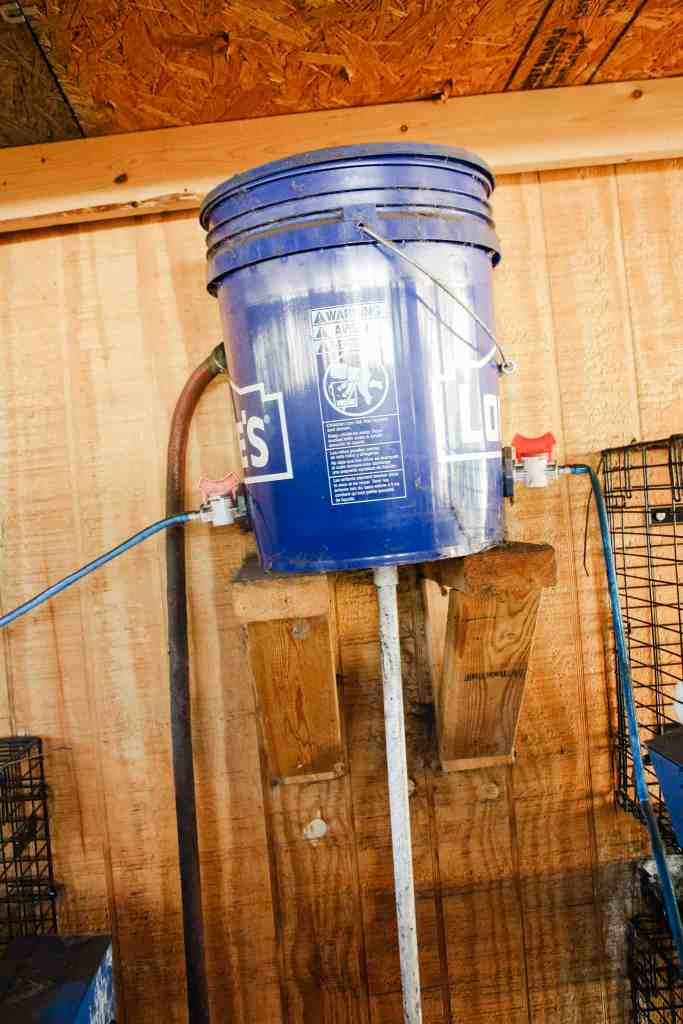
Now your rabbits will have access to fresh water at all times, and you will have one less daily responsibility. The more you can streamline the animal care process, the more likely you will be able to stick with it!
Covered Rabbit Area
It is important that your rabbit area has some sort of shelter, roof, or cover. If not, the pellet food and hay will become ruined when it rains. It is also good for the rabbits to have shelter versus being stuck in the rain with no where to go.

A meat rabbit set up can be easily adapted to fit your own backyard! Play around with your space, don’t be afraid to use vertical space, and set up systems that will make animal care easy!